




How to Prevent Your Casings from Bursting During Stuffing or Cooking ?
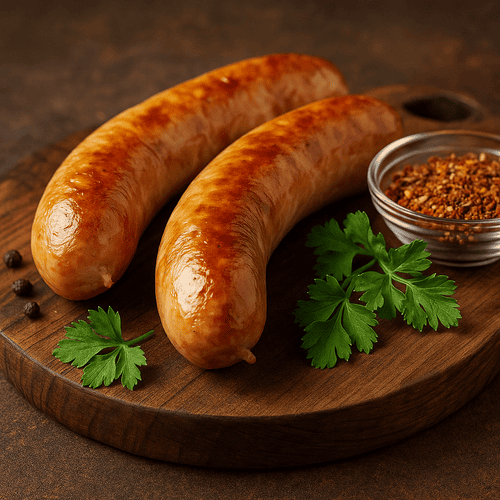
When making homemade sausages, nothing is more frustrating than seeing the casings burst during stuffing or cooking. Not only does this ruin the presentation, but it also alters the texture and the final quantity of the product. Fortunately, this problem can be easily avoided with a few best practices—especially if you use premium quality natural casings, like those offered by Cebonat.
1. Properly Desalt and Rinse Natural Casings
The first common mistake is insufficient desalting. Natural casings must be rinsed several times with clear water then soaked in lukewarm water to restore their flexibility and elasticity. Poorly hydrated casings behave like dry plastic: they break.
2. Soak for Long Enough Before Use
To guarantee optimal strength, let your casings soak in lukewarm water for at least 15 minutes for rehydrated, untangled casings in brine, and a minimum of 4 to 6 hours for dry-salted casings. Lukewarm water (but never hot) helps achieve a flexible and perfectly stretchable texture.
3. Do Not Overfill the Casings
One of the main causes of bursting is overfilling. You must leave a margin of flexibility so that the pressure can distribute itself. An overly taut casing will burst either upon exiting the stuffing nozzle, or later in the pot or frying pan. A professional-quality stainless steel meat stuffer allows for a more regular filling, limiting pressure variations.
4. Use Well-Mixed and Non-Compact Meat Filling
If the filling is too compact, it blocks air circulation and creates areas of tension. Properly mixing the meat, spices, and seasonings ensures a homogeneous and flexible texture. For a clean and homogeneous cut, a pro-quality stainless steel boning knife is also recommended, as poorly prepared meat increases the risk of bursting.
5. Prick Air Bubbles During Stuffing
Air bubbles are the enemies of homemade sausage. They create pockets that heat up faster than the rest and cause the casing to burst. A fine needle or a sausage pricker allows for easy removal.
6. Cook Gently to Avoid Thermal Shock
Cooking should always start over low heat or in water at 70–80 °C (158–176 °F). Thermal shock = exploding casings. Then gradually increase the temperature. Slow cooking also helps preserve all the flavors of the natural casings used.
7. Choose Genuine Quality Natural Casings
Finally, the most frequent mistake simply comes from poor quality or aged casings. Cebonat natural casings are carefully selected, calibrated, and prepared in a traditional way, guaranteeing flexibility, resistance, and consistency—three essential guarantees to prevent bursting. To accompany your preparation, our professional spices allow you to obtain an authentic, balanced, and flavorful result.
Preventing your casings from bursting is not a matter of luck, but of technique and quality raw materials. By adopting these simple steps and choosing quality natural casings, you will obtain perfectly formed, flavorful, and cooking-resistant sausages. The success of your preparations always starts with product quality—and on this point, Cebonat is a benchmark.